How to Choose a Domain Name: 2026 Guide for SEO & Branding
Learn how to choose a domain name for SEO and branding, what to avoid in a domain name, and how to evaluate TLD, length, memorability, and domain history.
Why Your Domain Name Matters for SEO
Your domain name is your online identity. It affects:
- Brand recall — How easily people remember and find you
- Click-through rates — Whether users click your result in search
- Authority building — How quickly you can build Domain Rating (DR)
- Type-in traffic — Direct visits from people typing your domain
While Google has stated that exact-match domains (EMDs) no longer get special ranking treatment, a good domain still helps indirectly by improving brand signals and making link-building easier.
Check the DR of any domain you're considering →
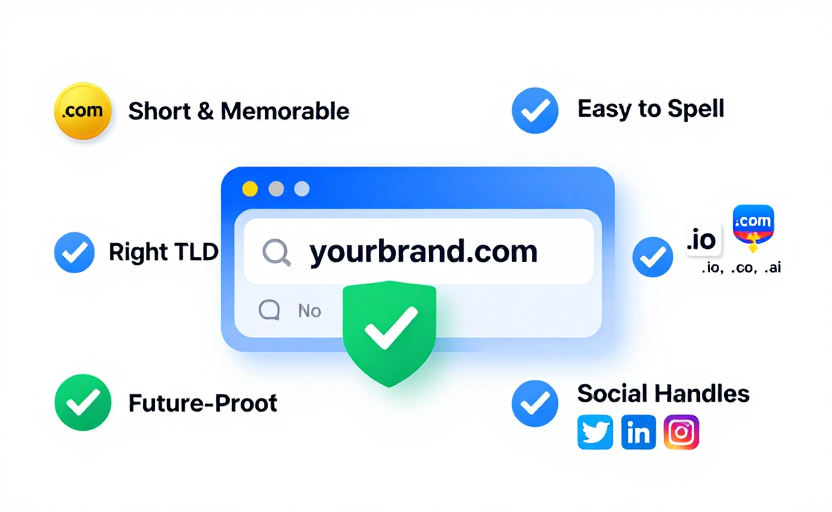
10 Rules for Choosing a Domain Name
1. Keep It Short and Memorable
Shorter domains are easier to remember, type, and share. Aim for 6-14 characters if possible. Some of the most successful domains are short: Google, Amazon, Netflix, Stripe.
If your brand name is longer, consider an abbreviated version for the domain.
2. Make It Easy to Spell and Pronounce
Avoid:
- Unusual spellings (e.g., "kwick" instead of "quick")
- Numbers that could be spelled out (is it "4" or "four"?)
- Hyphens (people forget them)
- Double letters that cause confusion (e.g., "toolibrary" — is it one L or two?)
Say your domain out loud. If you have to spell it for someone, it's too complicated.
3. Choose the Right TLD
.com is still the gold standard. Users trust it, remember it, and default to it. If .com is taken:
| TLD | When to Consider |
|---|---|
| .io | Tech startups, SaaS products |
| .co | Companies, startups (becoming mainstream) |
| .net | Tech infrastructure, networks |
| .org | Nonprofits, organizations |
| .ai | AI products (trending, but premium priced) |
| Country TLDs (.co.uk, .de) | Local businesses in that country |
Avoid TLDs associated with spam (like .biz, .info, .click) unless you have a specific reason.
4. Avoid Trademark Issues
Before buying a domain, check:
- USPTO trademark database (for US)
- Google the name to see existing brands
- Social media handles availability
Buying a trademarked name risks legal action and losing your domain later.
5. Consider Keywords (But Don't Overdo It)
Having a keyword in your domain can help with branding and relevance signals. For example, "drchecker.net" clearly signals what the site does.
But don't stuff keywords:
- Good:
drchecker.net— Clear, brandable - Bad:
free-dr-checker-tool-online.com— Spammy, untrustworthy
If you can include a relevant keyword naturally, great. If not, brandability matters more.
6. Check Domain History
Before buying, check if the domain was previously used:
- Use the Wayback Machine to see past content
- Check if it was ever penalized by Google
- Look for existing backlinks (good or bad)
A domain with a clean history is worth a premium. A domain with a spammy past can hold your SEO back.
Check the Spam Score of any domain →
7. Make It Future-Proof
Will your domain still make sense if you:
- Expand to new product categories?
- Enter new markets?
- Pivot your business model?
"JoesPizzaShop.com" limits you. "JoesFood.com" is more flexible. Brand names (like "Stripe" or "Notion") are most flexible.
8. Secure Social Media Handles
Before finalizing a domain, check if matching handles are available on:
- Twitter/X
- YouTube
- TikTok
Consistent branding across domain and social builds trust.
9. Consider Domain Age (But Don't Obsess)
Older domains can have advantages:
- Existing backlinks and authority
- Trust signals built over time
- Possibly indexed already
But a new domain with a clean slate can be better than an old domain with spam history. Check any domain's DR to see its current authority.
10. Buy Similar Domains for Protection
If you're building a serious brand, consider buying:
- Common misspellings
- Other TLDs (.net, .co)
- Singular/plural variations
Redirect them to your main domain to capture typos and protect your brand.
Domain Age and SEO: What You Need to Know
There's a persistent myth that domain age is a major ranking factor. The reality:
- Age alone doesn't rank you — Google's John Mueller has confirmed domain age is not a direct ranking factor
- Older domains often have advantages — They've had more time to accumulate backlinks, content, and trust signals
- New domains can rank quickly — With good content and links, new domains can compete
What matters more than age:
- Content quality — Does your page answer the search intent?
- Backlinks — What's your Domain Rating?
- Technical SEO — Is your site fast, mobile-friendly, and crawlable?
- User experience — Do visitors stay and engage?
If you're buying an aged domain, check its backlink profile and Spam Score first.
Should You Buy an Expired Domain?
Buying expired domains can accelerate SEO, but it's risky:
Pros:
- Existing backlinks and DR
- Age and trust signals
- Possibly existing traffic
Cons:
- Hidden spam history
- Irrelevant backlinks
- Possible manual penalties
If you buy expired:
- Check DR with our DR Checker
- Check Spam Score with our Spam Score Checker
- Review backlinks with our Referring Domains Checker
- Use the Wayback Machine to review past content
- Submit to Google Search Console and check for penalties
Domain Extensions and International SEO
If you're targeting specific countries:
- Use country-code TLDs — .co.uk for UK, .de for Germany, etc.
- Or use .com with proper hreflang — Signal your target country in Search Console
For global reach, .com remains best. It's recognized worldwide and doesn't signal any specific country.
FAQ
Does domain name affect SEO?
Yes, but indirectly. A clear, memorable domain improves branding, click-through rates, and link acquisition. Exact-match keyword domains no longer get significant ranking benefits, but can still help with relevance signals.
Should I choose .com or another TLD?
.com is preferred for most sites. It's what users expect and trust. Alternatives like .io or .co work well for tech brands. Country-code TLDs (.co.uk, .de) are excellent for local businesses in those markets.
How important is domain age for SEO?
Domain age is not a direct ranking factor. Older domains often rank better because they've accumulated backlinks and content over time, not because of age itself. A new domain with great content and links can outrank an old domain.
Can a bad domain name hurt SEO?
Indirectly, yes. A confusing domain makes it harder to build brand recognition and attract links. A domain with a spammy history (past penalties, bad backlinks) can hold back your SEO until you clean it up.
How do I check a domain's SEO history?
- Check DR to see its backlink profile strength
- Use Website Spam Score as one third-party investigation clue
- Check referring domains for link sources
- Use Wayback Machine to see past content
- Check Google Search Console for manual actions